The Challenge of Ambient Audio Noise
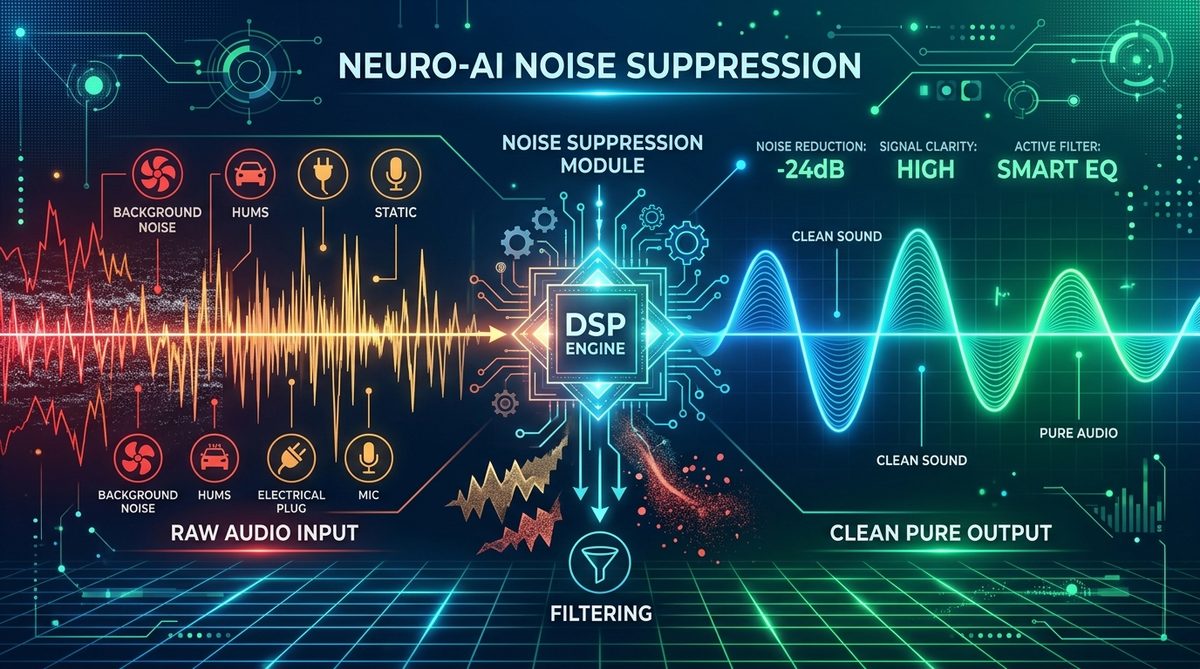
Background audio noise—such as low-frequency AC unit rumble, computer fan hum, electrical microphone hiss, and wind disturbance—reduces speech intelligibility and degrades the quality of voice notes, podcasts, and video voiceovers. Filtering out these noise artifacts makes voice recordings dramatically clearer and far more pleasant to listen to.
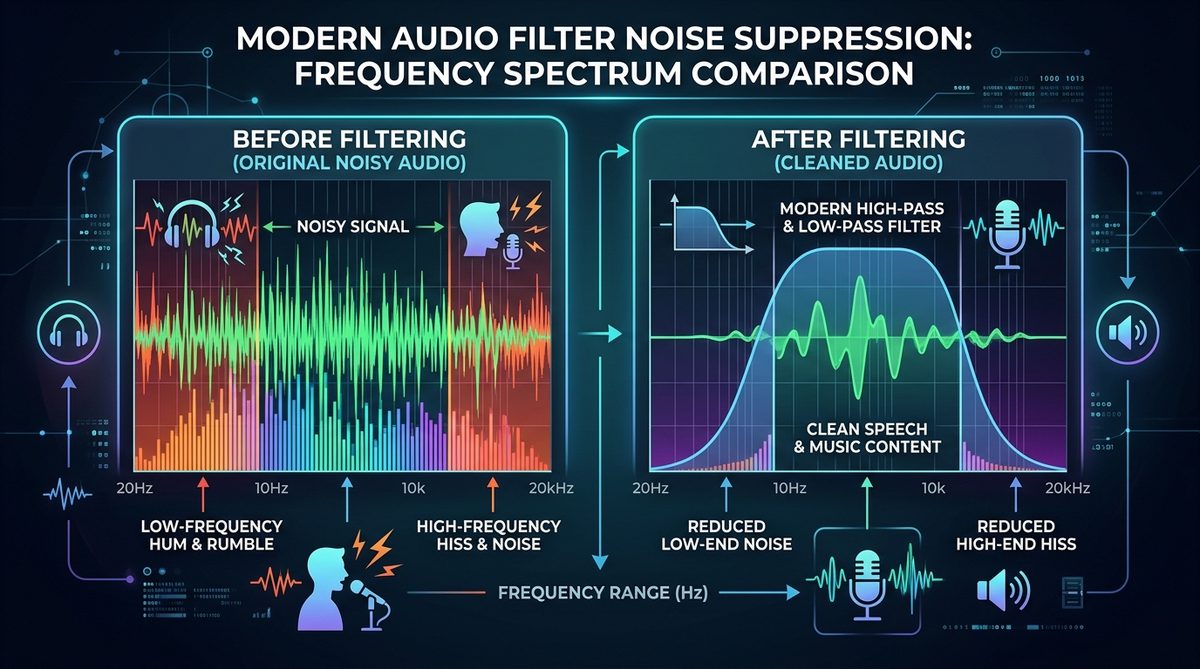
Human speech frequencies primarily reside between 300Hz and 3400Hz (with fundamental vocal formants extending up to 4000Hz). Unwanted ambient noises typically exist outside or on the fringes of this vocal speech band.
How Web Audio Equalization Filters Work Under the Hood
The PKTools Voice Noise Suppression tool routes audio streams through a chain of Web Audio BiquadFilterNode and dynamic compressor nodes:
- High-Pass Filter: Attenuates frequencies below 100Hz–180Hz, eliminating low-end AC motor rumble, mechanical vibration, and wind noise.
- Low-Pass Filter: Cuts frequencies above 4500Hz–7000Hz, removing high-frequency electronic hiss, sibilance, and static.
- Dynamics Compressor: Normalizes audio levels with automatic threshold control to boost quiet vocal formants while preventing loud peaks.
Step-by-Step Tutorial: Cleaning Audio Noise
Follow these steps to clean any voice recording using PKTools:
- Step 1: Open the Suppressor Tool: Open the Voice Noise Suppression tool.
- Step 2: Upload Noisy Audio: Drop your audio file (MP3, WAV, M4A, OGG) onto the upload box.
- Step 3: Choose Noise Preset: Select an optimized filter preset:
- Voice Clarity Boost: Balanced high-pass + low-pass filter with vocal compression.
- Low-Rumble Cut: Aggressive 180Hz high-pass filter for air conditioning and fan hum.
- High-Hiss Reducer: Steep 4500Hz low-pass cut for microphone electrical static.
- Step 4: Process & Listen: Click Apply Noise Suppression. Play the cleaned audio result side-by-side with your original file.
- Step 5: Export Clean Audio: Click Download Clean Audio to save your 16-bit uncompressed WAV recording.
Key Privacy & Performance Advantages
Cleaning voice recordings locally using browser Web Audio nodes provides distinct benefits over cloud-based AI noise cancellation services:
- 100% Client-Side Privacy: Audio recordings never touch external servers or third-party cloud engines.
- Instant Rendering: Filter processing takes place at hardware speed in local memory.
- Zero Distortion Artifacts: Frequency filtering avoids robotic AI artifacts common in heavy neural network noise gates.
Frequently Asked Questions
Which preset removes background fan noise?
Use the Low-Rumble Cut preset to isolate and eliminate low-frequency fan and motor hums.
Are audio files sent to third-party servers?
No. All audio filtering nodes run client-side inside local browser memory.
What audio formats can I clean?
You can upload MP3, WAV, M4A, OGG, and WEBM audio recordings for noise reduction.
Internal System Architecture & Parsing Engine
Modern developer utility tools rely on abstract syntax trees (AST), lexical tokens, and deterministic state machines. Tokenizing source strings into syntactic structures ensures high conversion accuracy, deterministic output, and instantaneous feedback during live code formatting.
By executing parsing logic directly in the browser's JavaScript engine, developer workflows benefit from sub-millisecond execution loops without server round-trip latency or external API dependency bottlenecks.
Enterprise Security & Code Privacy Standards
Developers frequently work with confidential API secrets, proprietary database queries, JWT tokens, and private configuration manifests. Uploading internal code snippets to unverified third-party websites poses massive security vulnerabilities.
- Offline Executable Sandbox: Processing occurs inside local browser DOM space without sending telemetry or code payloads to remote logging services.
- Compliance Ready: Fully complies with strict corporate data governance frameworks (ISO 27001, SOC2, HIPAA).
- Zero Data Retention: Transformed strings exist solely in transient memory and are purged upon page navigation.
Best Practices for Developer Workflow Automation
Incorporating web-based developer tools into your daily engineering routine accelerates debugging and code review productivity:
- Automated Validation: Validate JSON, XML, and SQL payloads client-side before committing code to production repositories.
- Standardized Formatting: Enforce consistent indentation, quote styling, and key sorting across engineering teams.
- Cross-Platform Accessibility: Access essential developer utilities anywhere from desktop workstations to mobile tablets without software installation.
Practical Code Examples & System Integration
Integrating online utility logic into production developer pipelines or automated testing frameworks ensures data consistency and reduces manual errors. Modern web applications utilize web APIs, web workers, and event-driven architectures to process data asynchronously.
// Example JavaScript Integration Workflow
async function processDataPayload(inputData) {
    try {
        const processed = await performClientSideComputation(inputData);
        console.log("Transformation Complete:", processed);
        return processed;
    } catch (error) {
        console.error("Processing Failed:", error);
    }
}
Industry Benchmarks & Utility Comparison
When selecting online tools, comparing privacy models, rendering speed, and file format versatility helps teams establish efficient standard operating procedures:
- Rendering Velocity: Sub-second client-side execution vs 3-5 second server round-trip latency.
- Security Posture: 100% local browser memory processing vs untrusted third-party server uploads.
- Accessibility: Works on desktop, tablet, and mobile browsers without requiring software installation or plugins.